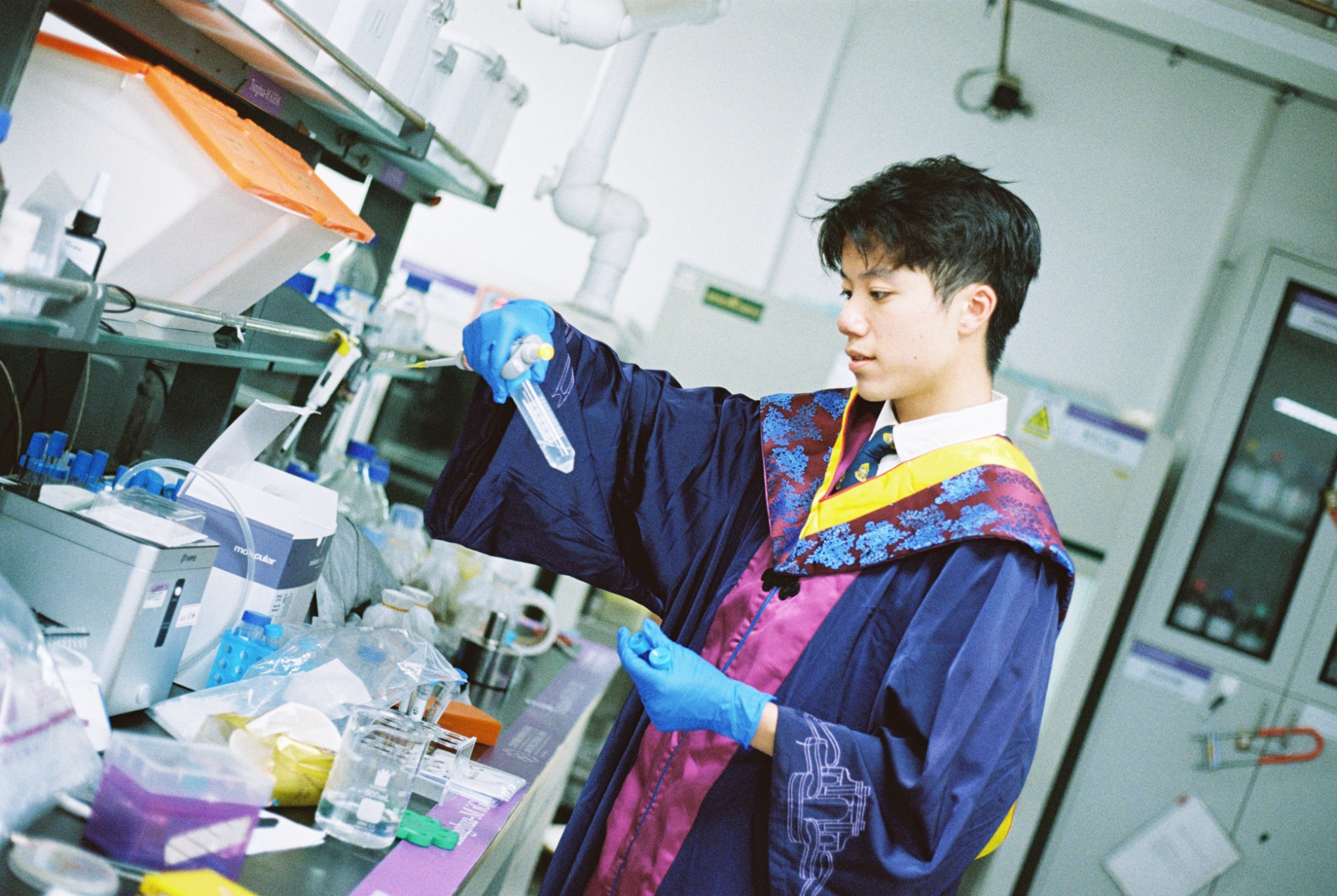
At the interception of light and biology.
I design artificial cells for new-to-nature photosynthesis — and teach protein language models to read and write the code of fluorescence.
My work lives where light meets life — building cells that have never existed, to capture light in ways evolution never tried.
I'm a doctoral researcher at the University of Cambridge, in the Department of Chemistry, reimagining photosynthesis from first principles: synthetic compartments engineered to intercept light and drive new-to-nature chemistry.
Before Cambridge I trained across four labs and three continents — nanobody screening at Harvard, protein nanopore engineering at Oxford, photoenzymes at Manchester, and cell-free synthetic biology at Tsinghua — and increasingly at the frontier of machine learning for biology, fine-tuning protein language models to understand and design fluorescent proteins.
Across all of it I'm chasing the same thing: the elegant translation of light into life.
FluorCode — a language model for fluorescent proteins
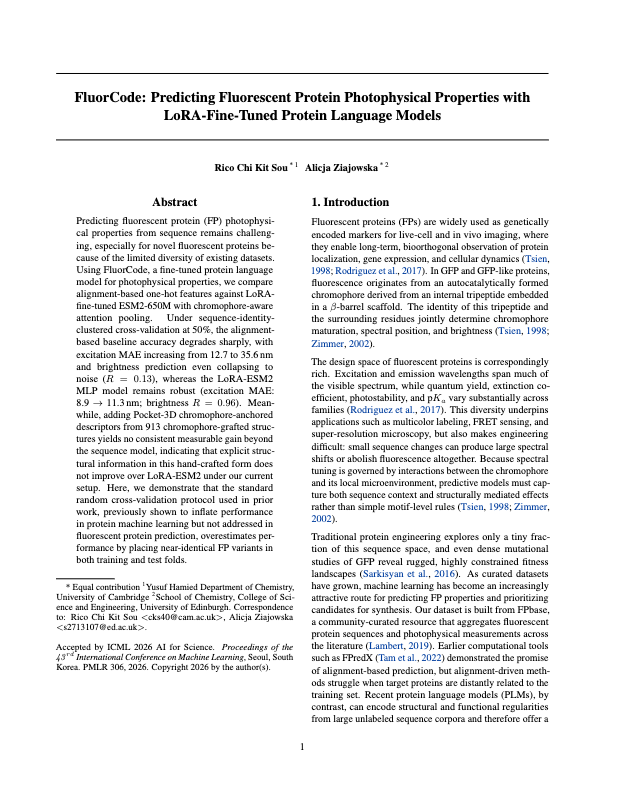
First-author work at the ICML 2026 AI for Science workshop. A LoRA fine-tune of ESM2 that learns the grammar of fluorescent proteins to predict spectra and propose new variants.
Artificial cells for new-to-nature photosynthesis
Doctoral project — synthetic cell-like compartments that intercept light and drive carbon chemistry along non-natural pathways.
Research & preprints
A growing record across chemistry, synthetic biology, and ML for the life sciences.
Soft magnetic microrobots
Porous-silica-doped soft robots with stability-enhanced multimodal locomotion — magnetic actuation at the millimetre scale.
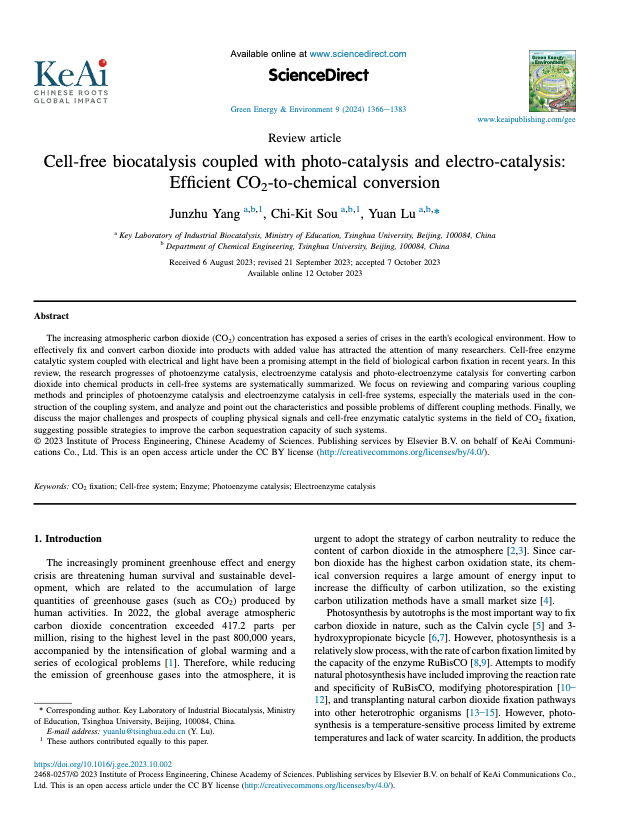
Cell-free biocatalysis coupled with photo- and electro-catalysis: efficient CO₂-to-chemical conversion
A harmonized hybrid of physical, chemical, and biological catalysis for CO₂ valorization.
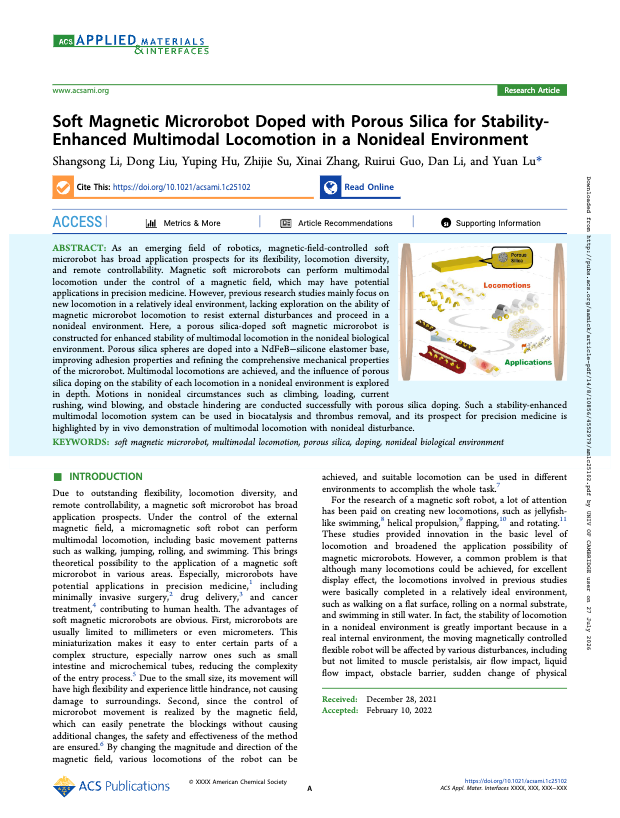
Soft magnetic microrobot doped with porous silica for stability-enhanced multimodal locomotion
Contributing author (listed as Zhijie Su).
PhD student, Chemistry
Chemical & synthetic biology — artificial cells for new-to-nature photosynthesis: compartments that intercept light and drive non-natural chemistry.
Undergrad Researcher — Nanobody Screening
High-throughput discovery of nanobodies by templated emulsification for neuroblastoma therapies — CDR-randomized generic libraries, genotype–phenotype association in droplets, and click-chemistry bioconjugation of hydrogel beads.
Undergrad Researcher — Protein Nanopore Engineering
Extended long β-barrel nanopores for protein sensing: electrophysiology and single-channel recording, expression and purification of Protective Antigen, and bioinformatic pore design.
Undergrad Researcher — Photoenzymes
Engineered fatty-acid photodecarboxylase to convert fatty acids into fuels under blue light — broadened substrate scope (C4–C12) and built real-time CO₂/NADPH kinetic assays.
Researcher — Cell-free Synthetic Biology
Built an enzymatic CO₂-fixation pathway driven by thylakoid NADPH/ATP regeneration and quantum-dot photocatalysis, with MOF-immobilized enzymes for long-term illumination.
BEng, Chemical & Biological Engineering
Department of Chemical Engineering.
Wet Lab
- Protein expression & purification
- Microfluidics · droplets
- Click chemistry
- Cryo-EM · confocal microscopy
- PCR · gel electrophoresis
- Enzyme kinetics · LC-MS
Computing
- Python
- MATLAB · C++
- COMSOL
- LaTeX
- PyTorch · ESM2 · LoRA
Software & Design
- SnapGene
- AlphaFold · ChimeraX · PyMOL
- BioRender · Blender
- Illustrator · Photoshop
Languages
- English
- Cantonese
- Mandarin
Teaching a model the language of light
↗ soonWhat a cell would do, if it had never met the sun
↗ soonFour labs, three continents: a research diary
↗To be announced soon.
I also have an Actor dream